Showing posts with label tuna. Show all posts

Monday, February 25, 2013

Name that tuna

The escolar, Lepidocybium flavobrunneum,
which has been sold as white tuna and
Chilean sea bass.
You can't tuna fish? Heck, you can't even tell it's a tuna by looking at it.


The non-profit oceans conservation group Oceana last week announced the results of one of the largest seafood fraud investigations to date, revealing just how many seafood sellers around the United States are less than honest about their offerings.

The study compiled data from more than 1,200 seafood samples from 674 retailers in 21 states between 2010 to 2012. DNA testing showed that 33 percent of those samples were mislabeled or posing as fish that they were not. Samples claimed to be tuna and snapper had the highest fail rates, at 59 percent and 87 percent, respectively. Only seven of 120 samples of “red snapper” purchased nationwide actually proved to be red snapper. The rest belonged to any of six different misrepresented species.

As Quartz reporter Christopher Mims points out, in Chicago, Austin, New York and Washington D.C., every single sushi restaurant sampled sold mislabeled tuna. In 84 percent of samples, “white tuna” turned out to be escolar, a fatty fish that produces a side effect that I won't mention on a food blog.

As Mims writes, if you’ve ever wondered why the sushi in the display case is so plentiful given the dwindling supply of tuna around the world, well, this may explain it.

The good news is that the fish in your grocery store has a 82 percent chance of being what it is labeled as, compared to 62 percent in all restaurants and a mere 26 percent in sushi restaurants. Another reason that maybe you should be cooking at home more often.

Friday, October 12, 2012

Bean there, done that

Tuscany Bean Salad - photo by Lori Korleski Richardson
Young, tender rainbow chard, fresh from the garden
Photo by Lori Korleski Richardson
Tuscany is a food lovers dream. And one of its claims to fame is its bean dishes. Tuscany is so tied to beans that its people are known as "mangiafagioli" (bean eaters) in the rest of Italy.

One of Tuscans' favorite beans is the cannellini, sometimes called "white kidney beans" in American stores. That is a horrible misnomer: Except for the shape, cannellini beans have nothing in common with kidney beans. Not the color, not the texture and especially not the taste.

Even after cooking, cannellinis keep their shape, their firmness belying their tender insides. They have a pleasant nutlike flavor, and their mild taste makes them a favorite for minestrones.

They make a great salad, hearty enough to continue into winter when local lettuces are long gone. Keep a few cans around and you can have this salad until your chard freezes. And it's good without chard, after that. To make it a main-dish salad, add a drained can of tuna, or serve on a bed of prepared wheatberries.

Lori K's Tuscan bean salad
© 2012, Lori Korleski Richardson
Serves 2 as a main dish, 4 as a side salad

Ingredients
1 can cannellini beans (or white Northern or navy beans), rinsed and drained well
1 small red onion, half, peeled and sliced thinly
4-6 young rainbow chard leaves, sliced and microwaved, covered, until just wilted, about a minute
1 tablespoon capers
Sea salt and freshly ground pepper, to taste
2 tablespoons extra-virgin olive oil
Arugula or wheatberries, optional

Instructions
In a bowl, combine the beans, onion, chard and capers, and tuna if using. Season with salt and pepper. Add olive oil and toss to coat well. Chill.

To serve, put on a plate of arugula or chilled wheatberries. Serve.

Note: To prepare wheatberries, put 1 cup in 3 cups boiling water and cook until tender, about 45 minutes. Drain and chill.


Thursday, July 8, 2010

Right out of the box

In my mom's day, it was common for ladies to turn to the boxes of their favorite mixes for new recipes to thrill their snarly kids and bored husbands. Sometimes it even worked. The recipes got passed around, became instant classics, turned into the staples of community cookbooks, then the recipes made it to the next logical step: A packaged mix or frozen dinner. Then out came cookbooks harking back to the "original recipes" and how to make the dish "from scratch."

Then we started to cook fresh and the recipes collected dust.

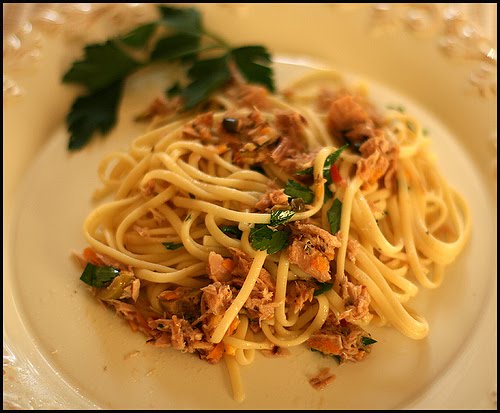
Today, as I emptied an open box of linguine into my pasta jar, I spied a recipe on the package for linguine with tuna, olives and capers. OK, that sounded pretty good. And it was.

Here's to a new generation of "ripped from the box" recipes.

De Cecco's Linguine with Tuna, Olives and Capers
Serves 6-8

Ingredients
1 pound linguine
Salt
1/4 cup olive oil
1/2 cup of black olives, pitted and finely chopped
1 1/4 tablespoon capers
2 cloves crushed garlic
1 tablespoon chopped parsley
Pepper 
1 small can tuna, shredded with fork

Instructions
Cook the pasta for 11 minutes in boiling salted water. In the meantime, sauté in olive oil the olives, capers and garlic. Add a few tablespoons of the boiling pasta water, then put in the parsley and some ground pepper. Let it cook for a few minutes, then remove from heat and add the tuna. Drain the linguine and put in a serving dish. Add the sauce, mix well and serve.

Tuesday, December 22, 2009

Snowbound!

Many apologies for taking so long to write; we've been snowbound here and still are until the county road we're on is plowed. We were without power for 30 hours, and although I don't think anything in the freezer thawed out completely, I'm doing my best to now cook up everything as soon as I can.

Yesterday, I grilled up a bag of thawed chicken breasts; two I coated with hot sauce and garlic salt, the rest with preserved lemon and pepper, sprayed them with olive oil and grilled them. The hot-sauce ones I then split lengthwise and used them as taco filling, along with slices of yellow peppers. I grilled 4 tortillas mounded with shredded cheddar on low until the cheese melted to make the taco shells.

While the power was out, we used the Coleman grill to cook up a tuna steak and a salmon fillet, with preserved lemon slices on each; we had them with leftover pasta alfredo and green beans and ate by candlelight before lighting a fire in the fireplace to keep warm. We didn't have much wood, so the place got pretty chilly. Luckily, we have lots of warm clothes, and it's surprising how toasty it can get under a down comforter. And we did have the foresight to locate all our candles and camping equipment before night fell.

By not opening the freezer at all until the power came back on, by opening the refrigerator sparingly and setting the refrigerated items outside when it was between 32 and 40, I think we were able to get by without any spoilage (even the milk made it through OK and I didn't have to open any cans). We could have eaten out of our pantry for at least another week, but water may have eventually become a problem, and firewood most definitely would have.

Friday, October 16, 2009

Top 10 Riskiest Foods

This is definitely worth reposting.

Top 10 Riskiest Foods Regulated by the FDA
The list includes leafy greens, eggs and tuna

By: Candy Sagon | Source: AARP Bulletin Today | October 5, 2009

The good news is chocolate is not on the list. The bad news—ice cream is.
Some of the healthiest, most inviting foods on your grocery list—lettuce, eggs, ice cream—are the most likely to make you sick, says a Washington, D.C., nonprofit advocacy group.
Researchers at the Center for Science in the Public Interest (CSPI) on Tuesday announced their own grocery list of the 10 riskiest foods regulated by the Food and Drug Administration. The most hazardous, in order: leafy greens, eggs, tuna, oysters, potatoes, cheese, ice cream, tomatoes, sprouts and berries.
50,000 cases of food-borne illnesses
According to CSPI’s study, those 10 foods account for nearly 40 percent of all food-borne outbreaks linked to FDA-regulated foods between 1990 and 2006. Nearly 50,000 illnesses—from temporary stomach cramps to disability and death—were reported as a result of the outbreaks. And those illnesses are only the tip of the iceberg. For every case of salmonella poisoning reported, for instance, federal officials estimate that another 38 cases go unreported.
Meat, pork and poultry, which are regulated by the U.S. Department of Agriculture, were not included in the research. Caroline Smith DeWaal, director of CSPI’s food safety program, says the group chose FDA-regulated foods because the federal agency is responsible for “80 percent of the food supply,” including produce, dairy products and seafood, as well as packaged goods like peanut butter and refrigerated cookie dough—both of which were involved in recent food-poisoning outbreaks.
Leafy greens, No. 1 culprit
Many of the items that made the top 10 list are healthy, vitamin-packed foods that nutrition experts frequently urge Americans to eat. “Leafy greens hit a nutritional home run, but they’re starting to mimic the well-known risks of ground beef,” says Sarah Klein, an attorney with CSPI and lead author of the study. This is partly because, like the ground scraps and bits collected to make hamburger meat, the popular bags of prewashed, ready-cut greens are collected from a variety of sources. “A large batch can be contaminated by just one item,” notes DeWaal.
Leafy greens, which include iceberg lettuce, romaine, spring mix, spinach and cabbage, sickened nearly 13,570 people who reported becoming ill—an estimated 30 percent of all the reported illnesses caused by the top 10. This includes the highly publicized 2006 outbreak of food poisoning and deaths traced to bagged spinach contaminated with E. coli bacteria.
Eggs, the second most risky food in the study, are now subject to new FDA regulations that went into effect this summer. The rules require egg producers to test for salmonella—the cause of 95 percent of egg-related food illness, according to CSPI—and refrigerate eggs during storage and transportation. The agency, in announcing the new rules in July, said it expects them to help decrease the 30 deaths annually caused by contaminated eggs.
Watch that homemade ice cream
Salmonella in raw and under-cooked eggs was also the culprit when Americans got sick eating ice cream. Almost half of the ice cream outbreaks could be traced to homemade ice cream made with under-cooked eggs, the study found.
That familiar deli standby, potato salad, pushed potatoes onto the risky foods list, says Klein. “Potatoes are always cooked before eating, but they’re likely being cross-contaminated by other items like mayonnaise or meat,” she says. More than 40 percent of potato-related outbreaks were linked to foods prepared in restaurants and food establishments like grocery stores and delis.
Toxic tuna
Researchers were also surprised to find that scromboid poisoning, from the hard-to-destroy scromboid toxin, made tuna the third riskiest food in the CSPI study. The toxin is most commonly found in fresh tuna (think sushi and seared tuna in restaurants) but cannot be destroyed by cooking, freezing, smoking, curing or canning.
Symptoms of scromboid poisoning often include flushed skin, headaches, abdominal cramps and heart palpitations. More than 65 percent of the outbreaks reported from contaminated tuna occurred in restaurants, the study found.
Although the federal Centers for Disease Control and Prevention estimates that 76 million food-borne illnesses occur annually, Craig Hedberg of the University of Minnesota School of Public Health notes that “our food supply is relatively safe, with one illness for every 3,000 to 4,000 meals eaten.” Still, he adds, “new challenges to food safety will continue to emerge and we need a strong and flexible regulatory response.”
Help for the FDA?
The FDA has been criticized for its lax oversight, particularly in the wake of recent illnesses and deaths from tainted spinach and peanut butter products popular with children.
This summer, the House approved a bill that would provide sweeping new powers to the FDA for the first time in 70 years, including stepped-up inspections and the ability to mandate a product recall. The Senate is expected to take up its version this fall and Erik Olson, director of food and consumer product safety with the Pew Health Group, hopes to see a new bill enacted “before Christmas.”
Candy Sagon is a food and health writer in Washington, D.C.
Copyright 1995–2009, AARP. All rights reserved. A Member of AARP Global Network

Thursday, March 19, 2009

Bento there, done that

Bento boxes almost define the Japanese lunch. Long before sushi took hold of the American scene, a couple of pieces found their way onto the bento box, along with a variety of three to six other foods. This was in keeping with the philosophy of all things in moderation while providing something for each of the tastes and senses. It's a wonderful way to discover new foods, a little bit at a time.

But I still was surprised by my friend and former co-worker Gina Kim's video on box lunches.

For one thing, she interviewed a Caucasian mom (Deborah Hamilton, creator of the excellent Web site, http://lunchinabox.net) who got into the bento box for lunch when her husband was diagnosed with celiac disease. Hamilton stressed how the food doesn't have to be Japanese, it just has to be as pretty to look at as it is good to eat.

Another revelation was Hamilton's use of molds to turn hardboiled eggs into fun shapes for her little kid. I had no idea you could do that. What fun!

And there was this great tip: Use silicone baking cups as dividers in the storage containers. Not only do they keep the food flavors from blending together, they add a lot of color as well.

Great work, Gina!

Wednesday, March 18, 2009

Name that tuna

Quick - what do you think of when you hear the words "tuna salad"? A scoop of canned tuna and fresh diced celery held together with mayonnaise? Yes, that's the traditional recipe, whether it is atop a bed of greens or slathered on a sandwich.

But if you'd rather not go the mayo route, here's a tuna salad alternative that has more protein and fiber.

Lori K's tuna salad
Serves 2

1 can white beans, drained and rinsed
1 tablespoon extra-virgin olive oil
1 teaspoon fresh lemon juice
1 tablespoon diced red onion
1 5-ounce can white albacore tuna, drained
1 tablespoon capers
Sea salt and pepper to taste
1 tablespoon fresh minced parsley, sage or tarragon (optional)

Instructions
Mix all ingredients and chill. Serve on mixed greens that have been tossed with olive oil and a sprinkling of sea salt.

Saturday, February 21, 2009

Low-calorie, delicious lunch

Tired of soup? Tired of sandwiches? Here's a lunch that will warm your heart. I made it at home, but it could be packed as a lunch to be made in the microwave at work.

Lori K's fast low-cal, low-carb, low fat lunch
Serves 1

Ingredients
1/4 cup chicken broth
1 tablespoon finely chopped shallot
2 cups raw baby spinach (about 3 ounces)
3 ounces albacore tuna, drained
Hickory smoked salt and pepper, to taste

Instructions
Put broth and shallots in a deep saucepan and bring to a boil. Add spinach (it will look like a lot, but cooks down to about a 1/4 cup) and cover tightly. Boil for one minute. Stir in the tuna, and season with the smoked salt and pepper. Drain (if necessary) and serve.

Per serving: 121 calories, 2 g fat (0.5 g saturated), 5.7 g carbs

If you are watching your salt intake, use no-salt broth and add a little liquid smoke to it instead of using regular broth and hickory smoked salt. Another option would be to use half chicken broth and half lemon juice and skip the smoke.

This would also be good over rice or pasta, or mixed with white beans, for a more filling meal.

Thursday, November 13, 2008

The ol' recipe file, updated

If you haven't checked out the Washington Post's recipe database, you're missing a really good source for searching out recipes by ingredient or cuisine, by preparation time, or whether they are kid-friendly. Many of the recipes have been tested by home cooks, and all have a nutrition facts box, just like the one on prepared foods in the grocery store. 

After plugging in "tuna," I found a delicious Basque stew that took about a half hour to prepare from items I already had on hand, and it was quite enjoyable.  

To test it out for yourself, go to www.washingtonpost.com/recipes